
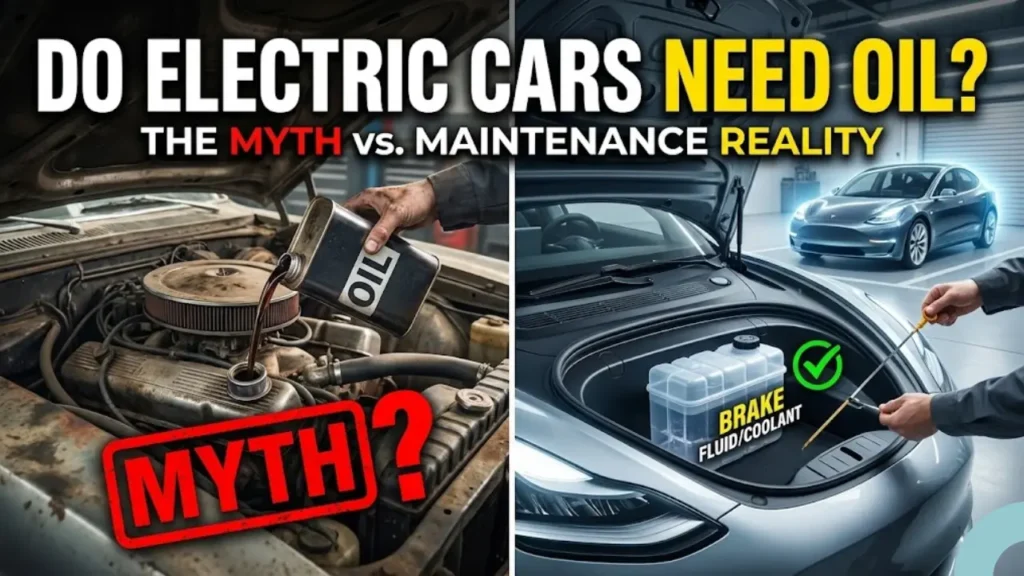
You bought an electric car to escape the gas station. But old habits die hard. After a few months of driving, a nagging thought pops into your head: “Wait, do I need to schedule an oil change?”
You pop the hood (or the “frunk”), look for a dipstick, and find… nothing. Just a plastic storage bin.
Does this mean an electric vehicle (EV) runs on magic? Not exactly. While you can say goodbye to messy engine oil, your car still relies on critical fluids to keep running. Let’s separate the myths from the maintenance.
🛢️ Quick Answer: Do EVs Need Oil?
No, electric cars do not need engine oil. They use electric motors, which do not have pistons, valves, or combustion cycles that require lubrication.
However, EVs do require other fluids, including Coolant (for the battery), Brake Fluid, and Transmission Fluid (Reduction Gear oil). Skipping these can still damage your vehicle.
The Fluid Checklist: Gas vs. Electric
If you are used to a gas car, your maintenance schedule is about to change drastically. Here is exactly what you can stop buying, and what you still need to check.
| Fluid Type | Gas Car (ICE) | Electric Car (EV) |
|---|---|---|
| Engine Oil | YES (Every 5k miles) | NO (Never) |
| Transmission Fluid | YES (Complex gears) | YES (Reduction gear) |
| Coolant | YES (For Engine) | YES (For Battery) |
| Brake Fluid | YES | YES |
💡 Why No Engine Oil?
Engine oil exists to lubricate thousands of moving metal parts (pistons) exploding against each other at high heat.
An electric motor only has one moving part (the rotor). It spins using magnetic fields, not friction. No friction means no oil is needed. This is one reason why EV ownership costs are so low.
Saving $100 a year on oil changes is nice, but the real savings come from “refueling.” Find out how much cheaper electricity is compared to gas in our breakdown: Cost to Charge a Tesla: The Math Behind the Savings.
The “Hidden” Fluids: What Actually Needs Changing?
Just because there is no engine oil doesn’t mean the car is dry. An EV is a high-performance machine that generates massive torque and heat. To handle this, it relies on three critical fluids.
The Myth: “EVs don’t have gears.”
The Reality: While they don’t have a 10-speed gearbox like a truck, they do have a “Single-Speed Reduction Gear.” This gearbox spins at up to 20,000 RPM (way faster than a gas engine). It needs specialized oil to keep the gears from grinding themselves to dust.
When to change: Usually heavily extended intervals (every 100,000 miles or “Lifetime” depending on the manufacturer). Check your manual!
The Reality: This is the most important fluid in your car. In a gas car, coolant stops the engine from overheating. In an EV, it stops the Battery from degrading or catching fire.
Batteries hate extreme heat and cold. This glycol-based fluid circulates around the battery cells to keep them at the perfect temperature.
The Paradox: EV owners rarely use their physical brakes because of “Regenerative Braking” (where the motor stops the car). So, the brake pads last forever.
The Problem: Brake fluid is hygroscopic—meaning it absorbs moisture from the air over time. Even if you never use the brakes, the fluid can turn into water, which boils under pressure and causes brake failure.
4. DIY Maintenance: What Can You Actually Fix?
Since you don’t need to crawl under the car to change oil, what maintenance can you do yourself at home? And more importantly, what should you NEVER touch?
- Wiper Fluid: Top up just like any car.
- Cabin Air Filter: Easy access (usually behind glovebox). Change every 2 years.
- Wiper Blades: Replace when they streak.
- Tire Pressure: Keep them inflated to improve range.
- High Voltage Cables: Anything orange is lethal (400V+).
- Battery Coolant: Requires a pressurized vacuum fill.
- Brake Fluid: Needs specialized tools to flush.
For specific instructions on how to change your cabin filter or wipers, always check the official guide. For example, here is the Official Tesla Do-It-Yourself Maintenance Guide.
Frequently Asked Questions (FAQs)
Yes, but not for the engine. They use oil for the reduction gear (transmission), A/C compressor oil, and brake fluid (which is a hydraulic oil).
Most manufacturers recommend a check-up every 12,000 miles or once a year mainly to rotate tires and inspect brakes/fluids.
You can officially delete “Oil Change” from your calendar.
While EVs aren’t 100% maintenance-free, they are significantly easier to own. Just remember: Ignore the engine oil, but obsess over your tires. That is the secret to happy EV ownership.
⚠️ Maintenance Disclaimer: The content on GreenMount Motors is for informational purposes only. Dealing with EV maintenance involves high-voltage systems. Always consult your specific Owner’s Manual or a licensed technician before performing any work. We are not responsible for vehicle damage.
Pingback: Pros and Cons of Electric Cars (2026 Guide): Are They Worth It? - greenmountmotors.com