
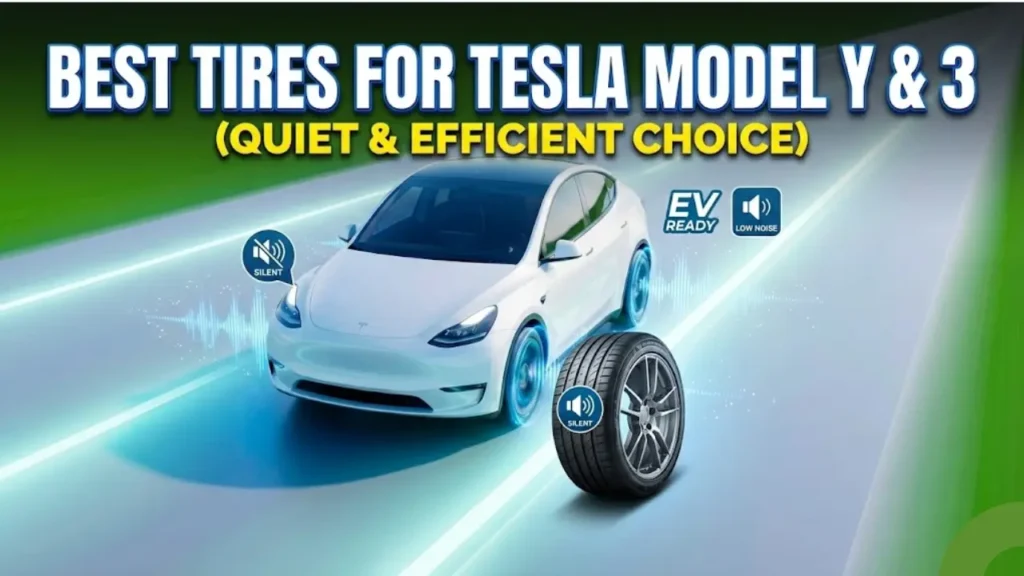
So, your Tesla just hit 20,000 miles, and the tread is already gone. You are not alone. The factory tires that come with the Model Y and Model 3 are notorious for wearing out quickly.
Now you are faced with a choice: Do you buy the same expensive tires again, or is there something better?
(If you are wondering why your rubber vanished so fast, read our deep dive on Why EV Tires Wear Out Twice as Fast as Gas Cars before you buy new ones.)
For this guide, we analyzed the top contenders based on three things Tesla owners care about most: Silence (Road Noise), Range Efficiency, and Tread Life.
🏆 Quick Picks: The Best Tires at a Glance
In a rush? Here are the top 3 winners for 2025.
| Category | Tire Model | Why We Love It |
|---|---|---|
| ⭐ Best Overall | Michelin Pilot Sport EV Ultra High Performance | The gold standard. Amazing grip, acoustic foam for silence, and designed specifically to extend EV range. |
| ☁️ Quietest | Continental ProContact RX Grand Touring | Utilizes “ContiSilent” technology. If you hate road noise on the highway, this is the one to get. |
| 💰 Best Value | Hankook iON evo AS All-Season EV | Excellent 50k mile warranty and great range efficiency, often $50 cheaper per tire than Michelin. |
What Makes a “Tesla Tire” Different?
You cannot just walk into Costco and ask for “tires that fit.” Electric vehicles require specialized engineering. Before you scroll down to the reviews, look for these three critical features:
- 1. Acoustic Tech (Foam): Tesla cabins are quiet because there is no engine. This makes tire noise (“road drone”) very obvious. The best tires have a layer of polyurethane foam glued inside to absorb vibration.
- 2. Low Rolling Resistance (LRR): Sticky tires kill your battery. EV-specific tires are designed to glide, adding 15-20 miles of range per charge compared to generic tires.
- 3. The “T0” Marking: Tires officially approved by Tesla engineers will have a “T0”, “T1”, or “T2” stamped on the sidewall. These are custom-tuned for your car’s suspension.
Detailed Reviews: The Top 3 Contenders
We selected these tires based on real-world feedback from the Tesla Motors Club forum and extensive testing data regarding rolling resistance and noise levels.
1. Michelin Pilot Sport EV
🏆 The Performance King
If budget is no issue, this is hands-down the best tire you can put on a Model Y or Model 3. Michelin developed this specifically from their Formula E racing experience.
It uses a harder rubber compound in the center (for efficiency) and a softer compound on the shoulders (for cornering grip). The result? A tire that sticks like glue but still extends your battery range.
- Incredible grip (0-60 launches feel safer).
- “Acoustic Tech” foam reduces cabin noise by 20%.
- Low Rolling Resistance improves range.
- Very expensive ($350+ per tire).
- Lower mileage warranty (20k miles) compared to touring tires.
2. Continental ProContact RX
🤫 The Silent Choice
Often found as the OEM tire on newer Model Y deliveries, the ProContact RX focuses on one thing: Comfort. It absorbs bumps better than the Michelin and uses “ContiSilent” foam technology to mute the hollow humming sound typical of EVs.
💡 Winter Warning: While these are “All-Season,” they are essentially 3-season tires. If you live in heavy snow zones, your range will suffer significantly.
Check our guide on Real World EV Range Loss in Winter to see why dedicated winter tires might be necessary.
- Extremely quiet on highways.
- Better pothole absorption (softer ride).
- Good availability (easy to find).
- Tread life is average (expect 25k-30k miles).
- Not as sporty/grippy as Michelin.
3. Hankook iON evo AS
💰 The Smart Value Pick
Hankook is the new disruptor. They designed the iON series exclusively for electric cars. They claim to offer the same performance as Michelin but with a significantly longer tread life and a lower price tag.
- Best Warranty: 50,000 miles (rare for EV tires).
- Excellent rolling resistance (Top Tier Efficiency).
- Great value for money.
- Brand prestige is lower than Michelin.
- Slightly stiffer ride than Continental.
Wait! Which Size Do You Need? (Gemini vs. Induction)
Before you click “Buy,” you must know your wheel size. Tesla Model Y and Model 3 come with different wheel configurations, and the Performance models often use a “Staggered Setup” (where rear tires are wider than front tires).
| Car Model | Wheel Name | Front Tire Size | Rear Tire Size |
|---|---|---|---|
| Model Y (Long Range) | 19″ Gemini | 255/45R19 | 255/45R19 (Same) |
| Model Y (Performance) | 21″ Überturbine | 255/35R21 | 275/35R21 (Wider) |
| Model 3 (Standard) | 18″ Aero | 235/45R18 | 235/45R18 (Same) |
*Note: Always check the placard on your driver’s side door jamb to confirm your specific tire size before ordering.
⚠️ Warning: Don’t Let Costco Ruin Your Battery
This is the most critical part of changing tires on an EV. Unlike gas cars, the entire floor of your Tesla is a high-voltage battery. If a mechanic places a hydraulic jack under the battery casing instead of the designated lift points, it can puncture the battery pack, causing $15,000 in damage.
Use “Jack Pucks”
Ensure your tire shop uses Lifting Pucks (rubber adapters) that fit into the chassis holes to safely lift the car away from the battery.
According to the official Tesla Model Y Owner’s Manual, lifting the vehicle without these adapters can void your battery warranty.
Resetting the Sensors (TPMS)
After installing new tires, your car might display a yellow tire warning light or show incorrect pressure readings for the first 20 minutes of driving. This is normal as the Bluetooth sensors recalibrate.
If the yellow tire icon flashes or turns red after a tire change, it might signal a sensor failure, not just low air.
Guide: Decode every warning light and color on your Tesla dashboard.
Where Should You Buy? (Price vs. Service)
You have three main options. Here is the honest breakdown of where to get the best deal.
Best for selection. They have massive data on EV tires and often ship directly to a local installer. Verdict: Best Selection.
Cheapest prices and great warranty (free rotation). However, they often have long wait times and limited stock of “Tesla Specific” tires. Verdict: Best Price.
Easiest option (they come to your driveway). But you pay a premium price and have zero choice in tire brands. Verdict: Most Convenient.
The Verdict: Which Tire Should You Choose?
Choosing tires for an electric car is a balancing act between Performance, Range, and Price. You can’t have it all.
- 🚀 Choose Michelin Pilot Sport EV if you want the absolute best performance and are willing to pay for it. It’s the safe, premium choice.
- 🤫 Choose Continental ProContact RX if your main priority is a quiet, comfortable cabin for long road trips.
- 💰 Choose Hankook iON evo AS if you want to save $300-$400 on a set without sacrificing too much quality.
Whichever you choose, remember: Rotate them every 6,000 miles. No tire in the world can survive an EV’s torque if you neglect the maintenance.
Frequently Asked Questions
Can I use non-EV tires on my Tesla?
Technically, yes, as long as the size and load rating match. However, you will likely notice more road noise and a 10-15% drop in driving range because standard tires have higher rolling resistance.
Do I need an alignment when getting new tires?
Highly recommended. EVs are heavy, and even a slight misalignment can shred a new set of tires in under 5,000 miles. Think of an alignment as cheap insurance for your $1,200 tire investment.
What does the “T0” marking mean?
“T0”, “T1”, or “T2” markings on a tire sidewall indicate that the tire was specifically engineered and approved by Tesla for their vehicles. These tires often contain acoustic foam and customized tread patterns.
Pingback: Can You Put Regular Tires on an EV? (Risks & Real Cost) - greenmountmotors.com