
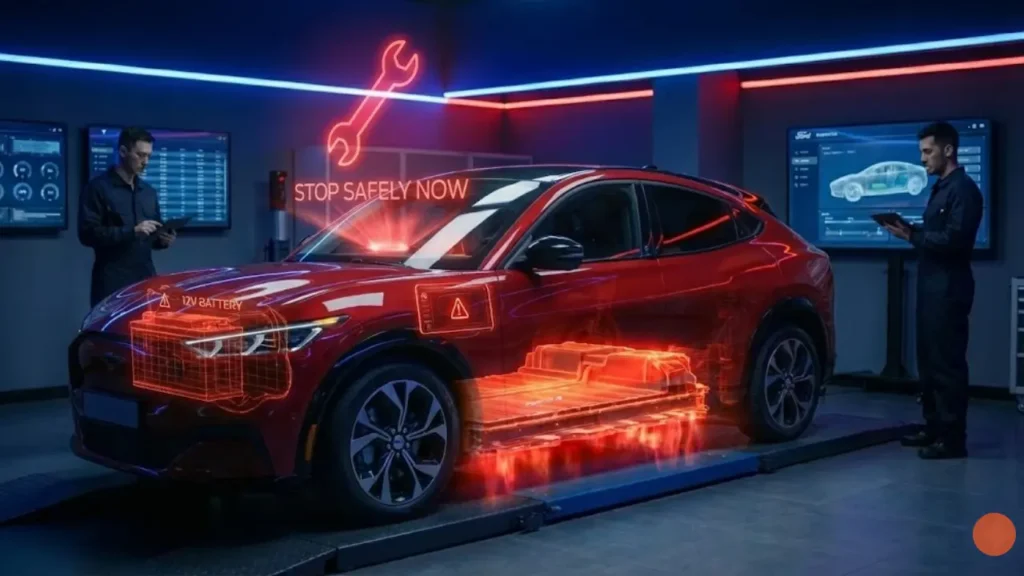
The Ford Mustang Mach-E is a stunning electric SUV. It drives like a sports car, looks aggressive, and carries the legendary pony badge. But for some owners, the dream ride has turned into a digital nightmare.
If you are researching Ford Mustang Mach-E problems before buying used, or if your dashboard just flashed a terrifying “Stop Safely Now” message, you have come to the right place.
While the Mach-E is a solid competitor to the Tesla Model Y, it suffers from “first-generation growing pains.” From high-voltage component failures to quirky software glitches, we have compiled the ultimate list of issues and—more importantly—how to fix them in 2026.
1. The “Stop Safely Now” Nightmare (HVBJB Failure)
Let’s start with the biggest, scariest issue. If you own a 2021 or early 2022 Mach-E, the High Voltage Battery Junction Box (HVBJB) is your potential ticking time bomb.
The Symptoms:
- You are driving on the highway or fast-charging.
- Suddenly, a red wrench icon appears with the message “Stop Safely Now.”
- The car loses power immediately (Limp Mode) or refuses to start after being parked.
Inside the battery pack, the main contactors (switches) can overheat and fuse together, especially during DC Fast Charging or full-throttle acceleration (GT models). When the computer detects this heat, it cuts power to prevent a fire.
The Fix & Recall:
Ford issued a massive recall (Safety Recall 22S41) to fix this. Initially, they tried a software update, but for many cars, that wasn’t enough.
- Software Patch: Ensures the car warns you before complete failure, allowing you to drive to a dealer.
- Hardware Replacement: If the contactors are damaged, Ford must physically replace the entire HVBJB unit with a beefier, redesigned version.
Buying Advice: If you are looking at a used 2021-2022 Mach-E, ask the seller for proof that the HVBJB recall has been performed. Models built after mid-2022 (and the 2026 refresh) have the updated hardware from the factory.
2. The “Deep Sleep” of Death (12V Battery Drain)
Imagine walking up to your futuristic SUV, pressing the door button, and… nothing happens. The screen is black, the doors are locked, and the car is a brick. You have likely fallen victim to the Ford Mach-E 12V battery drain.
Why it happens: While the massive high-voltage battery drives the wheels, a tiny lead-acid 12V battery powers the computers, locks, and modem. Early software bugs often kept the car “awake” trying to download updates or talk to the cloud, draining the small battery overnight.
This weak point isn’t unique to Ford. Almost every modern EV struggles with this “Vampire Drain” issue. In fact, replacing these small batteries is a common maintenance cost across the industry. Read our breakdown of EV 12V Battery Costs & Symptoms to understand why this $100 part can stop a $50,000 car.
If you are locked out, look for a small square panel in the front bumper. Pop it open to reveal two wires. Connecting a 12V power source (like a jump pack) here will pop the frunk (front trunk), allowing you to access the actual battery to jump-start the car.
3. Public Charging Faults & The NACS Shift
The Mach-E is a fantastic road tripper, but the charging experience has been a mixed bag of “Charge Fault” errors and handshake failures at Electrify America stations.
However, the game changed in 2024-2026. Ford became the first major automaker to gain access to the Tesla Supercharger network. But this brings a new challenge: Adapters.
To charge your Mach-E at a Tesla station, you need a specific NACS-to-CCS adapter. Using the wrong one can be dangerous or simply won’t work. Before you head out on a road trip, check our complete guide on EV Charging Adapters: NACS vs. CCS Explained.
4. “Phone as a Key” (PaaK) Glitches
Ford marketed the Mach-E with a cool feature: “Leave your keys at home, just use your phone!”
The Reality: In the real world, Ford Mach-E phone as a key not working is a top Google search for owners. The Bluetooth connection between the FordPass app and the car is often unstable. Owners report standing in the rain for minutes, waiting for the car to recognize their phone.
The Fix: Always, and we mean always, carry the physical key fob or set up the “Backup Passcode” on the door pillar keypad. That keypad isn’t just retro nostalgia; it’s your fail-safe when the tech fails.
5. The Frozen SYNC 4A Screen
The Mach-E features a beautiful, massive 15.5-inch vertical touchscreen. It controls everything: radio, navigation, and most annoyingly, the climate control. So, when this screen freezes or goes black (a common occurrence), you are flying blind.
The “Magic Button” Reset:
You don’t need to pull over. Simultaneously press and hold the Volume Down button (on the steering wheel) and the Seek Right (Next Track) button on the steering wheel for 10 seconds. The screen will turn black and reboot.
For more official troubleshooting steps on SYNC 4A, you can visit the Ford Official SYNC Support Page.
6. The “Mustang” Tire Tax
The Mach-E is heavy (over 4,500 lbs) and produces instant torque. This combination is fun for stop-light launches, but it is brutal on rubber.
Many owners report that the factory tires (usually Michelin Primacy A/S) need replacing as early as 20,000 miles. This isn’t a defect; it’s physics.
If you are switching from a gas car, the cost of EV tires might shock you. Before you buy a new set, read our guide on Why EV Tires Wear Out So Fast (And How to Make Them Last).
7. Mechanical Quirks: Rattles & Brakes
Since the electric motor is silent, you hear every other noise the car makes. Two common complaints include:
- Panoramic Roof Creaks: The glass roof can flex slightly over bumps, causing a creaking sound near the B-pillar. Dealers often apply special lubrication to the seals to fix this.
- Brake Groan: At low speeds, you might hear a groaning noise. This is often just surface rust on the brake rotors because the car uses “Regenerative Braking” most of the time, so the physical brakes rarely get used and cleaned.
The Verdict: Should You Buy a Mach-E in 2026?
The Ford Mustang Mach-E is a car with a split personality. It is one of the most fun-to-drive EVs on the market, with a soul that many feel Tesla lacks. However, the early models (2021-2022) were plagued by the HVBJB hardware failure.
Our Advice:
- Buy a 2023+ Model: Ford largely resolved the major hardware issues in later production runs.
- Check the VIN: If buying used, never skip this step. Use the NHTSA Recall Lookup Tool to ensure the HVBJB recall (22S41) has been completed.
Quick Summary: Pros vs. Cons
| ✅ The Good | ❌ The Bad |
|---|---|
| Engaging, sporty driving dynamics | HVBJB Failure risk (2021-22) |
| Better paint quality than Tesla | Slow charging curve (older models) |
| Real instrument cluster behind wheel | Software is laggier than Tesla |
Frequently Asked Questions
The 2021 models had below-average reliability due to the battery junction box failure. However, reliability has significantly improved for the 2023-2026 model years as Ford fixed the hardware and software bugs.
2. What does “Stop Safely Now” mean on a Mach-E?This is a critical error message indicating a high-voltage system fault. It often means the main battery contactors have overheated. You should pull over immediately and contact roadside assistance.
3. Is maintenance expensive for a Mach-E?No. Like most EVs, it requires very little maintenance. You’ll mostly pay for tire rotations, cabin air filters, and wiper blades. Brake pads last a very long time due to regenerative braking.