
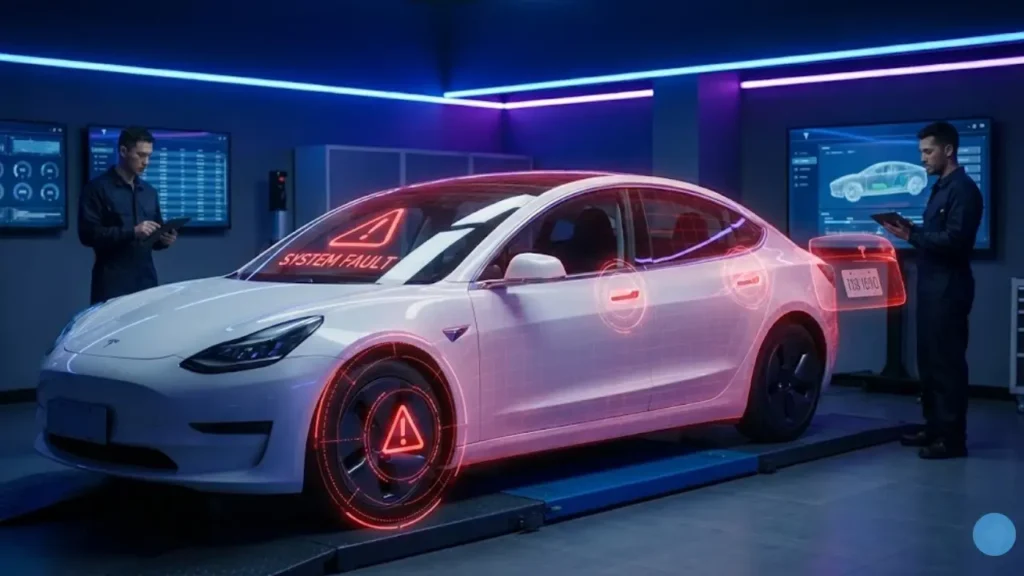
The Tesla Model 3 is the car that changed the world. It made electric vehicles cool, fast, and accessible. But if you spend five minutes on any owner forum, you will see a different side of the story.
From phantom braking on highways to paint that chips if you look at it wrong, the Model 3 has a unique set of quirks. If you are planning to buy one in 2026, or if you already own one and wonder “Is this normal?”, this guide is for you.
We have compiled the ultimate list of common Tesla Model 3 problems based on thousands of owner reports and service bulletins. The good news? Most of these issues are minor and have easy DIY fixes. Let’s dive into the reality of Model 3 ownership.
1. Build Quality: The “Panel Gap” Era
For years, Tesla Model 3 build quality issues were the running joke of the automotive industry. While newer models (especially the “Highland” refresh and units from Giga Shanghai) have improved drastically, consistency is still a gamble compared to brands like Toyota or BMW.
What to look for:
- Misaligned Trunks: Stand behind the car and look at the gap between the trunk lid and the tail lights. It is often wider on one side.
- Protruding Door Handles: Sometimes the door handles sit slightly deeper or protrude further than the body panel, creating wind noise.
- Uneven Frunk Hoods: The front hood might sit higher than the fender, looking like it’s unlatched.
2. Paint Quality Issues
If you ask owners about their biggest regret, many will say: “I didn’t get Paint Protection Film (PPF).”
Tesla Model 3 paint quality issues are well-documented. To be eco-friendly, Tesla uses “soft” water-based paint, particularly on colors like Solid Black and Multi-Coat Red. While it looks great in the showroom, it is prone to:
- Rocker Panel Chips: The design of the Model 3 flares out at the rear wheels. The front tires kick up stones directly onto the rear paint, turning it into sandpaper over time.
- Orange Peel: A texture that looks like the skin of an orange rather than a smooth mirror finish.
The Fix: Install mud flaps immediately after purchase and consider PPF for the front bumper and rocker panels.
3. Frozen Door Handles & Windows
The flush door handles look aerodynamic and sleek, but they have a major design flaw: Winter.
Because the handle needs to be pushed in at one end to pop out, ice accumulation can freeze it shut. If you pull too hard, you risk breaking the internal mechanism. Furthermore, the frameless windows must drop slightly to open the door. If the window is frozen to the seal, the door won’t open, or worse—you might shatter the glass trying to force it.
Don’t pour hot water on your car! If you live in a cold climate, you need to know the “Fist Bump” technique to break the ice safely. Read our complete guide on How to Fix Frozen Tesla Door Handles & Windows.
4. Tail Light Condensation
It is common to see fog inside the rear tail lights of a Model 3 after a car wash or heavy rain. According to Tesla, a little mist is “normal” and should clear up as the lights heat up.
However, if you see standing water droplets or a “fishbowl” effect, that is a seal failure. This can eventually short out the LED electronics. If your car is under warranty (4 years/50k miles), Tesla will usually replace the unit for free.
5. The “Gym Sock” AC Smell
You turn on the air conditioning to cool down, and suddenly the cabin smells like old cheese, vinegar, or sweaty gym socks. This is arguably the most notorious design flaw of the Model 3.
The Cause: The design of the air intake in the “frunk” area allows leaves and water to get trapped against the evaporator. Because there is no engine heat to dry it out, mold and bacteria grow rapidly on the filters.
Tesla has released software updates to run the fan after you park to dry the system, but for many, the smell returns every rainy season.
You don’t need to pay Tesla Service $150 to clean this. You can do it yourself in 20 minutes with a can of evaporator cleaner and new filters. Follow our step-by-step guide on How to Get Rid of the Tesla Vinegar Smell.
6. The Black Screen of Death & Glitches
In a normal car, if the radio dies, you can still drive. In a Tesla Model 3, the screen is the car. It controls the speedometer, wipers, mirrors, and climate.
Owners often report Tesla touchscreen glitches such as:
- Frozen Map: The GPS arrow gets stuck in one place while you are driving miles away.
- Phantom Touch: The screen acts like a ghost is pressing buttons, changing music, or cranking up the heat randomly.
- Total Blackout: The screen goes completely dark while driving (the car still drives, but it is terrifying).
When this happens, your first instinct is panic. But 99% of the time, the computer just needs a reboot. We have a dedicated guide on Safe Ways to Restart Your Tesla Screen While Driving so you are never left in the dark.
7. Phantom Braking (Autopilot Anxiety)
This is a safety-critical issue. Phantom braking occurs when the car is on Autopilot or Cruise Control and suddenly slams on the brakes for no reason—usually because it mistook a shadow, a bridge, or a truck in the next lane for an obstacle.
While Tesla’s shift to “Tesla Vision” (camera-only system) has improved things, many 2026 owners still report sudden deceleration on highways. It turns a relaxing drive into a stressful one, as you always have to hover your foot over the accelerator to override the mistake.
8. Rattles and Squeaks
Since an electric car has no engine noise to mask sounds, you hear everything. The Model 3 is infamous for interior rattles that develop over time.
Common Culprits:
- Seat Belt Adjusters: A ticking noise right next to your ear.
- Dash Wood Trim: Creaking when the temperature changes.
- Rear Seats: The latch mechanism can squeak against the striker.
Pro Tip: A roll of felt tape is a Model 3 owner’s best friend. Taping the metal latches usually solves the problem instantly.
9. The “Old Mattress” Squeak (Upper Control Arms)
If your slick, futuristic Model 3 starts sounding like an old rusty wagon every time you go over a bump or turn the steering wheel, you likely have the infamous Control Arm Issue.
The Problem: On many Model 3s, the ball joints in the front upper control arms lack sufficient grease from the factory. Water gets in, the joint dries out, and it creates a loud, embarrassing squeaking noise.
The Cost: If you are under warranty, Tesla replaces them for free with a newer, sealed design. Out of warranty, this repair can cost upwards of $300-$500 per side.
10. Eating Tires for Breakfast
New owners are often shocked when their tires need replacing after just 15,000 to 20,000 miles. “But I don’t even drive fast!” they say.
The Model 3 is heavy (due to the battery pack) and produces instant torque the moment you touch the pedal. This combination shreds rubber much faster than a gas car like a Honda Civic.
You can’t change the weight of the car, but you can double your tire life with the right maintenance habits. Learn why this happens and which tires last the longest in our guide: Why EV Tires Wear Out So Fast (And How to Stop It).
11. The Low Voltage Battery Warning
There is a common misconception that the main battery (the one that drives the car) is the weak point. It’s actually the opposite. The main battery is incredibly reliable, but the small 12V (or 16V Li-ion in newer models) battery is a frequent point of failure.
When this small battery dies, your car is effectively a brick. You can’t unlock the doors, open the frunk, or start the screen.
You usually get a warning on the screen saying “Schedule Service to Replace Low Voltage Battery.” Do NOT ignore this. If you see this message, read our breakdown of Tesla 12V Battery Replacement Costs & DIY Options immediately.
12. Phantom Drain (Vampire Loss)
Imagine parking your car with 80% charge, going on a week-long vacation, and coming back to find it at 60%. Where did the energy go?
This is called Phantom Drain. The Model 3 is a computer on wheels, and it loves to stay awake. Features like Sentry Mode, Cabin Overheat Protection, and even constantly checking the Tesla App can keep the car from “sleeping,” draining miles of range every day.
Is your car losing more than 1-2% battery per day while parked? That is not normal. Check our troubleshooting guide on How to Fix Tesla Phantom Drain to identify the vampire sucking your battery life.
The Verdict: Is the Model 3 Reliable in 2026?
After reading this list of horrors—dead batteries, peeling paint, and phantom braking—you might be terrified to buy a Model 3. But here is the context you need.
Every car has problems. A BMW 3-Series leaks oil. A Toyota Camry has transmission recalls. The difference is that Tesla’s problems are rarely mechanical engine failures. They are mostly cosmetic, electronic, or software-based.
The Good News:
- No Engine Maintenance: No oil changes, spark plugs, timing belts, or transmission fluid.
- Battery Longevity: The main high-voltage battery and drive units are proven to last 300,000+ miles with minimal degradation.
- Continuous Improvement: Unlike traditional cars, Tesla fixes many bugs (like screen glitches) over the air while you sleep.
While early models struggled, recent reliability data shows significant improvement. You can check the latest rankings on the J.D. Power Vehicle Dependability Study to see how Tesla compares to legacy automakers this year.
Warranty & Safety Recalls
Before buying a used Model 3, always check two things:
- Active Recalls: Tesla has issued recalls for trunk harnesses and boombox speakers. Enter the VIN on the NHTSA Recall Lookup Tool to ensure all safety work has been done.
- Warranty Status: The Basic Vehicle Warranty is 4 years/50,000 miles, but the Battery & Drive Unit Warranty lasts for 8 years or 100,000+ miles (depending on the trim). Verify the details on the Official Tesla Warranty Page.
Frequently Asked Questions
Statistically, the most frequent complaints are related to exterior build quality (paint chips, panel gaps) and AC odors caused by moisture in the filters. Mechanically, the upper control arm ball joints are the most common failure point.
2. Is Tesla Model 3 maintenance expensive?Actually, it is very cheap compared to gas cars. The main recurring costs are tires (which wear faster), windshield wiper fluid, and cabin air filters. There are no annual engine services required.
3. How long do Tesla Model 3 batteries last?Data suggests Model 3 batteries retain about 90% of their capacity after 200,000 miles. The battery is designed to outlast the car itself in most use cases.
Pingback: Tesla Ownership Transfer Not Working? How to Fix & Claim Your Car (2026) - greenmountmotors.com