
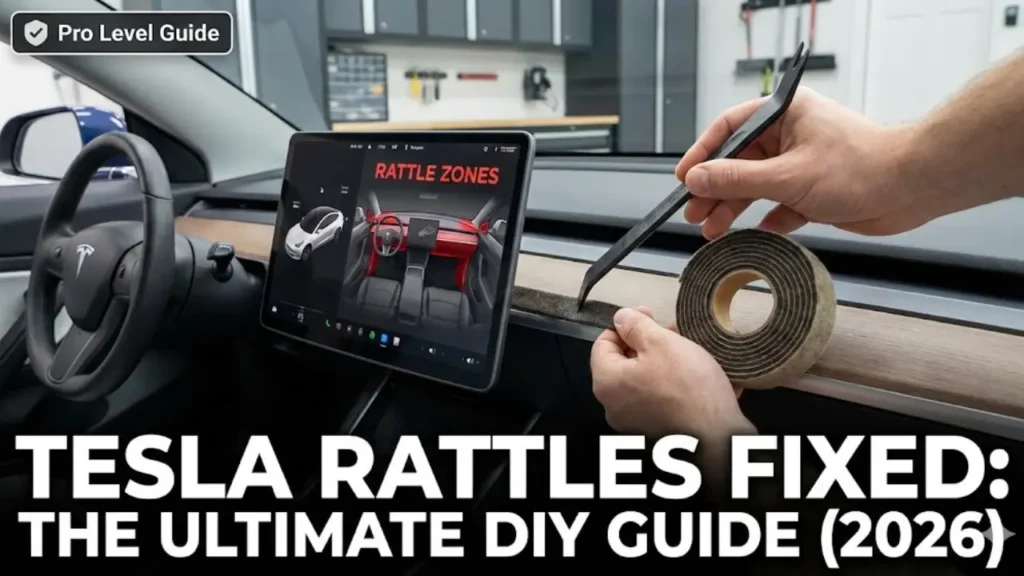
You love your Tesla for its silent, electric powertrain. There is no engine roar, no exhaust drone—just pure peace. But that silence is a double-edged sword.
Because the cabin is so quiet, you hear everything else. A loose clip in the seatbelt adjuster sounds like a maraca. A squeak in the dashboard sounds like nails on a chalkboard. It drives you crazy.
If you are looking for a Tesla Model 3 interior rattles fix, you don’t necessarily need a service appointment. In our experience, 90% of these annoyances can be fixed in your driveway with $15 worth of tools.
You don’t need to be a mechanic. To stop most rattles and squeaks, you just need three things:
- Automotive Felt Tape: To wrap around loose wires or plastic clips (The #1 Fix).
- Gummi Pflege (Rubber Care): To lubricate dry door seals that squeak.
- Silicone Lubricant: For plastic-on-plastic friction points.
Time Required: 15-30 minutes per rattle.
Why Does My Tesla Rattle So Much?
It is not just “build quality.” It is physics. In a gas car, the engine vibration and noise mask small squeaks. In a Tesla, the noise floor is so low that even a tiny loose washer becomes audible.
Also, the Model 3 and Model Y use a minimalist interior design. This means fewer screws and more “snap-fit” plastic clips. Over time, as temperatures change (expanding and shrinking the plastic), these clips loosen up and start to buzz against the metal frame.
Before you tear apart your dashboard, make sure the noise is actually coming from the interior. A “clunk” sound when going over bumps might be a suspension issue or a loose underbody shield.
If you suspect the noise is from underneath the car, you will need to inspect the chassis safely. Read our guide on How to Jack Up a Tesla Model 3/Y Safely to check for loose bolts or debris without damaging the battery.
If you are sure the sound is coming from inside the cabin—like a buzzing near your ear or a rattle in the dash—read on. We are going to hunt these ghosts down one by one.
Target #1: The B-Pillar “Ear Buzz”
This is the most reported rattle in Tesla history. It sounds like a Geiger counter clicking right next to your left ear while driving on rough asphalt.
The Culprit: The plastic slider mechanism inside the seatbelt height adjuster (on the pillar between the front and rear doors) is slightly loose. It vibrates against the plastic housing.
The Fix: You don’t need to take the pillar apart.
1. Cut a small square of fuzzy felt tape.
2. Slide the adjuster all the way down.
3. Stick the tape on the inside track where the plastic rubs.
The friction stops the vibration instantly.
Target #2: The Dashboard Wood Trim
Do you hear a creaking sound coming from the front when the temperature changes (like turning on the AC in summer)?
The Culprit: The long wood or white dash trim expands and contracts. It often rubs against the metal frame or the air vent plastic.
The Fix: Gently press down on different parts of the wood trim while driving. Once the noise stops, wedge a tiny piece of foam or felt between the trim and the dashboard frame. It’s invisible but effective.
Target #3: Door Panel Rattles (Bass Vibration)
If your door buzzes every time a song with heavy bass comes on, a clip inside the door panel is likely loose or a wire is hitting the plastic.
🔧 Maintenance Opportunity: If you decide to pop off the door panel to secure the loose wires with tape, inspect the door handle mechanism too.
Tesla door handles are notorious for freezing or getting stuck in winter. While the panel is open, apply some lithium grease. Read our guide on How to Fix Stuck Tesla Door Handles to prevent being locked out in the cold.
Cheat Sheet: Identify the Noise
Not all noises are the same. Use this table to diagnose what you are hearing before you start fixing.
| Sound Type | Likely Location | The Best Cure |
|---|---|---|
| High-Pitch Tick / Click | B-Pillar (Seatbelt) or Headliner | Felt Tape |
| Squeak / Chirp | Rear Seats or Armrest | Silicone Spray / Grease |
| Creaking (Plastic) | Dashboard or Screen Mount | Foam Padding |
| Rubber Rubbing | Door Seals / Windows | Gummi Pflege |
Target #4: The Model Y Rear Seat “Clunk”
If you drive a Model Y, you might hear a metallic clunking sound from the back whenever you go over a bump. This is usually the rear seat latch mechanism hitting the metal striker hoop.
The Fix: Wrap a single layer of electrical tape (or thin felt tape) around the metal hoop (striker) where the seat locks in. This creates a cushion and stops the metal-on-metal banging.
🐶 Pet Owner Note: If you frequently fold your rear seats down for your dogs, the latch mechanism gets worn out faster, leading to more rattles.
While you are back there fixing the noise, make sure your car is set up correctly for your furry friends. Check our Ultimate Guide to Tesla Dog Mode to keep the climate perfect while you shop.
Target #5: The “Chirping” Windows (Dry Seals)
Sometimes the noise isn’t a rattle; it’s a squeak. If it sounds like a bird chirping near your ear, it is likely the rubber door seals rubbing against the glass or the painted metal frame.
The Fix: Do not use oil or WD-40 (it ruins rubber). Buy a stick of “Gummi Pflege” (Rubber Care Stick). Run it along all the black rubber weather stripping around your doors and trunk. It conditions the rubber, makes it soft again, and silences the squeak instantly.
While hunting for rattles, be extremely careful around the A-Pillars (windshield posts) and the roof liner.
These areas house the Side Curtain Airbags. Do not jam screwdrivers or thick foam blindly into these gaps. If you damage the sensor or the airbag itself, it may not deploy in a crash. If a rattle is coming from deep inside an airbag area, let Tesla Service handle it.
Pro Trick: How to Find a “Hidden” Rattle
The hardest part of fixing a rattle is finding exactly where it is coming from while driving. You can’t drive and press on the dashboard at the same time.
Park your car safely. Connect your phone to Tesla Bluetooth. Download a free “Frequency Generator” app.
Play a tone starting at 30Hz and slowly increase to 100Hz at high volume. The bass vibration will cause the loose clip to rattle while the car is parked. This allows you to hunt down the noise safely without driving.
The Verdict: Silence is Golden
You don’t have to live with a rattling car. With $15 worth of felt tape and 30 minutes of your Saturday, you can make your Model 3 or Y sound as solid as a luxury German sedan.
If you are not comfortable taking trim pieces off, or if the noise persists, check the official Tesla DIY Maintenance Guides or schedule a mobile service visit. But for most squeaks, you are the best mechanic for the job.
Frequently Asked Questions
Does Tesla warranty cover interior rattles?
It depends. Tesla’s “New Vehicle Limited Warranty” typically covers “adjustments” (like rattles and fitment issues) only for the first 12 months or 12,000 miles. After that, they may charge you a diagnostic fee (often $100+) to fix a rattle.
Can I use WD-40 on my Tesla door seals?
No! Standard WD-40 is petroleum-based and can dry out or damage rubber over time. Always use a silicone-based lubricant or a specialized product like Gummi Pflege Stift for weather stripping.
What is the best tape for fixing car rattles?
Look for “Automotive Felt Tape” or “Tesa Tape” (specifically Tesa 51608). It is heat-resistant, fuzzy (to dampen noise), and is exactly what car manufacturers use at the factory.
⚠️ Disclaimer:
This guide is for educational purposes only. GreenMountMotors is not affiliated with Tesla, Inc.
Be careful when removing interior trim pieces, as clips can break easily. Avoid modifying areas near airbags (A-Pillars, Seat Sides). Perform DIY repairs at your own risk.